
Loading...
Serving Pensacola, FL and surrounding areas. (448) 236-1145
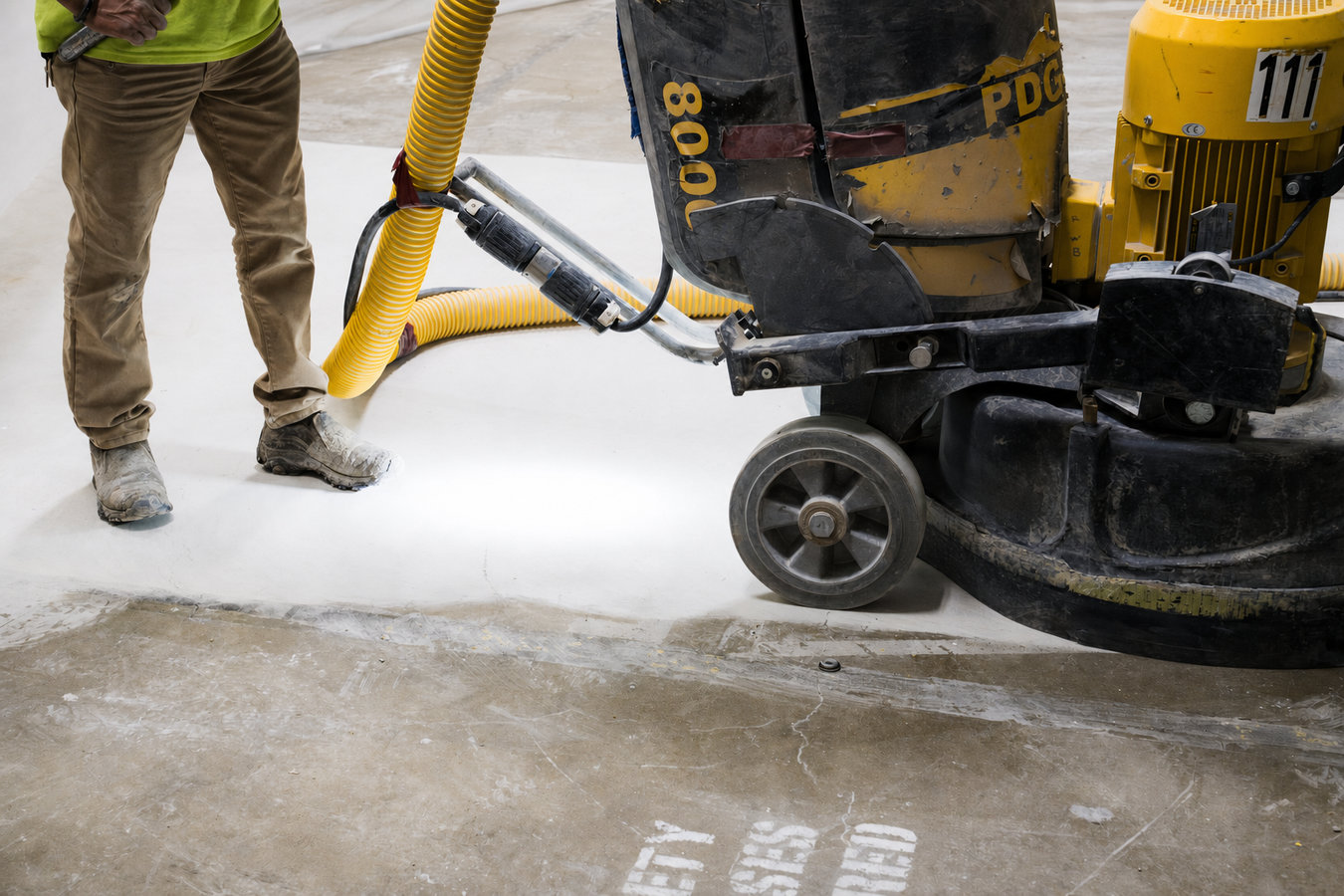
Skip the prep and any coating you put down will peel. We grind your slab clean, test for moisture, and hand you a surface that holds - whatever goes on top.
Concrete grinding in Pensacola uses diamond-tipped machines to shave the top layer off your slab - removing old coatings, adhesive, stains, and rough patches - and most residential garage jobs are completed in a single day. The result is a flat, clean surface with the open pores a new coating needs to grip.
Think of it like sanding wood before you paint. If you skip it, the new material has nowhere to bond and it will lift. This step is why floor coatings hold for years in some homes and peel in others - the difference is almost always what happened before the coating went down. Homeowners planning concrete sealing need the same thorough prep - a sealer applied over a dirty or sealed surface bonds poorly and can cloud or peel within months.
In Pensacola, the prep step also includes a moisture check. Our sandy coastal soils and proximity to Pensacola Bay mean slabs here carry more vapor transmission risk than slabs in drier parts of the country. We test before we grind, not after - so you know going in what the slab is doing and what system will hold over it.
If you can see patches where paint or an old epoxy coating is lifting away from the concrete, the surface underneath was never properly prepared - or moisture has worked its way up through the slab. In Pensacola's humid climate, this is one of the most common results of a rushed DIY job or a contractor who skipped the grinding step. Grinding down to bare, clean concrete and reapplying is the only real fix.
Walk across your slab in bare feet or run your hand along it. If you can feel ridges, bumps, or raised edges where cracks have formed, the surface is uneven enough to be a tripping hazard and will cause problems for any coating you apply. Grinding levels those high spots and gives you a flat, safe surface. This is especially common in older Pensacola homes where Escambia County's sandy soils have shifted the slab over the decades.
Those white patches - called efflorescence - are mineral deposits left behind when water moves up through the concrete and evaporates at the surface. They are common in Pensacola homes near the bay or in low-lying neighborhoods where groundwater sits close to the slab. They signal that moisture is actively moving through your concrete, and any coating applied over them will fail quickly without proper surface prep first.
If carpet, vinyl, or tile was removed and the adhesive or backing is still stuck to the concrete, that residue has to come off before anything new goes down. Grinding removes it cleanly and leaves a surface ready for whatever comes next. Chemical strippers can handle small areas but rarely get the full surface clean enough for a quality coating to bond reliably.
Our surface prep work handles residential garages, interior slabs, commercial floors, and outdoor concrete that needs to be cleaned and leveled before a new system goes down. Every job starts with a walkthrough to assess the current surface: how much coating or adhesive is present, whether there are cracks that need filling, and what moisture readings say. If you are planning concrete sealing for a driveway or patio, the prep process is the same - clean, flat, open concrete is what makes any sealer bond and last.
For floors that have heavy coating buildup or structural concerns, we also offer concrete floor stripping and removal when grinding alone is not the right tool - shot blasting and stripping are options for thick industrial coatings or floors with coating systems that grinding would take too many passes to remove efficiently. We will tell you which approach makes sense for your specific floor before any work starts.
Suits homeowners who want to apply epoxy, polyaspartic, or a sealer and need the slab clean, flat, and moisture-tested before the new coating goes down.
Best for living rooms, basements, and utility spaces where old flooring has been removed and the concrete needs to be cleared of adhesive and leveled before a new finish.
Suits warehouses, retail spaces, and light industrial floors where larger grinding machines and dust-collection systems allow efficient prep across wide areas.
Required before any sealer, epoxy, or decorative coating is applied - this step ensures the new material bonds to the concrete rather than to a layer of old residue.
Pensacola sits on the Gulf Coast with humidity regularly above 80% from spring through fall. That moisture does not stay in the air - it works its way up through concrete slabs from the sandy soil below, a process called moisture vapor transmission. If a contractor grinds your floor without first testing for this, the coating can bubble and peel within a year. This is not an occasional problem in Pensacola - it is the most common reason coatings fail here. Homes in Ensley and Cantonment with older slab stock from the 1960s through 1980s see this problem most often - but any slab in Escambia County can carry it.
Pensacola also has a large share of housing built before 1980. Slabs from that era are more likely to have surface cracks from sandy-soil settling, old adhesive from replaced flooring, and paint applied with products that have been failing for years. That history means more grinding passes, more prep time, and more attention to crack repair before a new coating goes down. Hurricane season timing matters too - coatings applied after grinding need stable humidity to cure properly, and Pensacola's August and September conditions can make that unpredictable. We plan around the local calendar and flag weather risks before they become your problem.
We ask a few basic questions - what area you want done, what is currently on the floor, and what you are planning to put on it afterward. We reply within one business day and schedule an in-person visit before giving you a price.
We walk the space, look at surface condition, check for cracks and uneven spots, and test for moisture - especially important given Pensacola's high water table in many neighborhoods. You get a written estimate that breaks down exactly what work is included, with no surprises.
The crew arrives with diamond grinding machines and industrial vacuums that capture dust at the source. For a typical one-car garage, the work takes a full day. You do not need to be home, but being available by phone is helpful in case the crew finds a deep crack or unexpected coating layer that needs a decision.
We walk the finished surface with you to confirm it is smooth, flat, and ready for the next step. If a coating or sealer follows on the same visit, we move straight into it. If coating is a separate appointment, we tell you exactly how long to keep the floor dry and clear before we return.
Free estimate, no obligation. We reply within one business day.
(448) 236-1145We test for moisture vapor transmission before we touch your slab - not as an optional add-on, but as a standard step on every job. In Pensacola, where the water table is shallow and humidity is high most of the year, skipping this test is the single most common reason a coating fails within the first year.
Concrete grinding produces fine silica dust that is a genuine health concern for your family and our crew. We use industrial dust-collection vacuums attached directly to the grinding machines, meeting OSHA silica standards for construction. A contractor who dismisses dust control questions is one to avoid.
We work on older homes across Escambia County and we know what 1960s and 1970s slabs look like underneath. If your floor has old adhesive, settled cracks, or a coating that has been re-coated twice before, we tell you what that means for timeline and cost before we start - not after we have opened it up.
We plan larger grinding and coating projects for the fall and winter window when humidity is lower and curing conditions are reliable. We check the forecast before any coating goes down and flag weather risks to you before they become your problem. That planning is part of the job, not an afterthought.
Surface preparation is invisible in the finished floor - you never see what held the coating down. That is exactly why we take it seriously. The work that happens before any coating touches your slab is what determines whether you are calling us back in two years to fix a peel, or telling a neighbor it still looks exactly right.
For concrete work that may involve structural repairs, the International Concrete Repair Institute (ICRI) publishes training and certification standards for surface preparation professionals. The American Society of Concrete Contractors is another useful reference for understanding what qualified work looks like.
Protect your properly prepped slab with a penetrating or film-forming sealer sized for Pensacola's coastal climate and salt-air exposure.
Learn MoreWhen thick industrial coatings or stubborn adhesive go deeper than grinding can reach efficiently, stripping and removal clears the slab cleanly.
Learn MoreBook before the busy spring season starts and lock in your spot - proper prep now means a coating that holds all the way through hurricane season and beyond.